
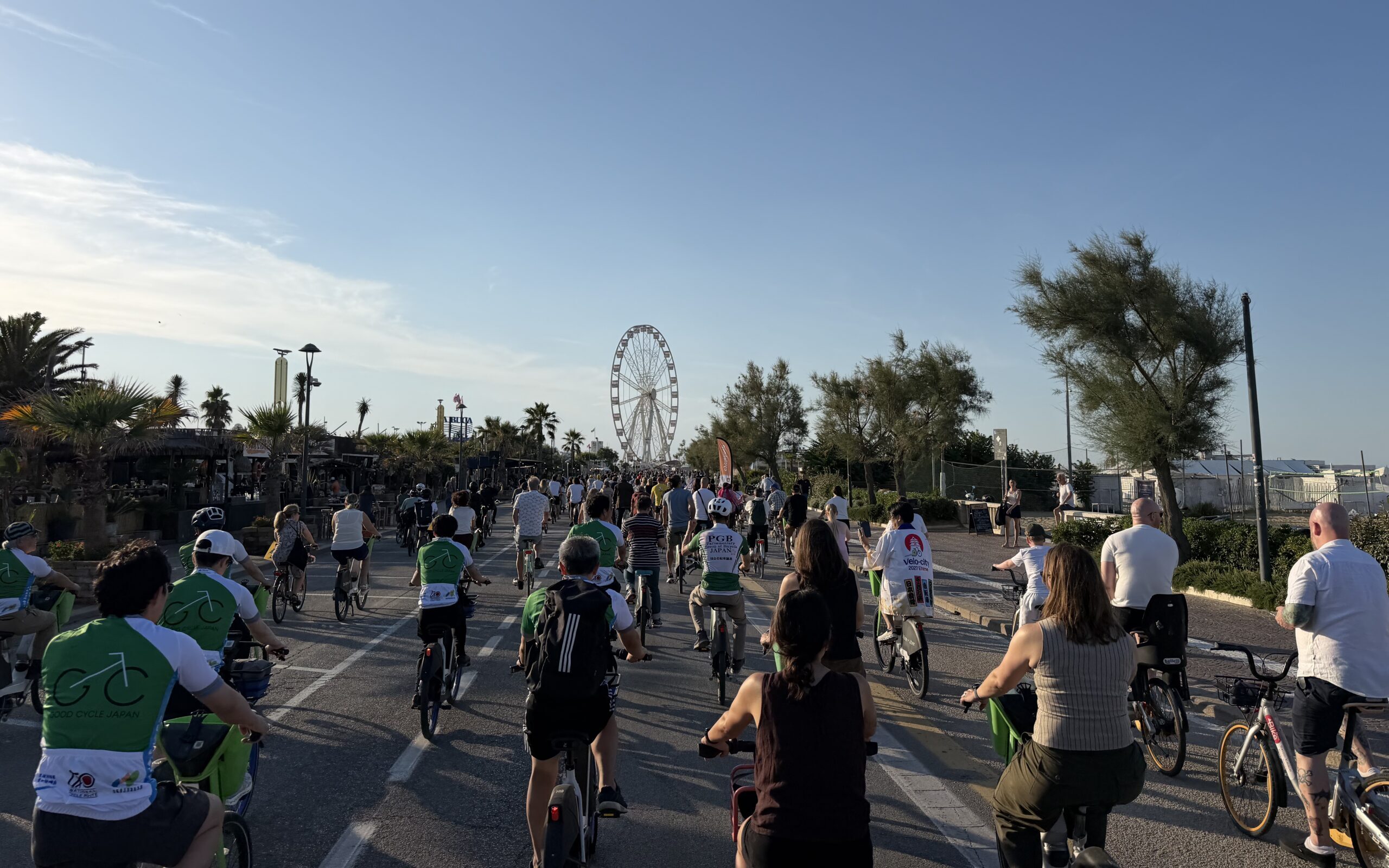
Change rarely happens in isolation, that’s why every movement needs a place to come together.
Every year, the Velo-City conference brings thousands of practitioners, policymakers, researchers and advocates into a new city. Knowledge is exchanged on stages and in meeting rooms, but perhaps the conference’s greatest value is often found elsewhere: in the moment an idea rooted in one neighbourhood begins to travel across cities and continents.
For the Bicycle Mayor Network, Velo-city is far more than an annual conference. It is one of the few moments when a network spanning more than 160 cities becomes a chance for connection, when people who usually meet on video call become trusted peers and local leaders who recognise themselves as part of something much bigger.
Different cities, shared questions
It is rare to find two Bicycle Mayors doing exactly the same work.
The Bicycle Mayor Network spans al across the globe, each shaped by a different local context. Some campaign for safer journeys to school, while others help women learn to cycle. Some create space for young people in mobility debates; others build support for cycling in places where political resistance remains strong.
What connects them is a deeply local role: listening to communities, bringing people and institutions together, and turning local needs into action.
A Bicycle Mayor in Addis Ababa faces a different reality from one in Amsterdam. Lima is not Tirana. Bari is not Pimpri-Chinchwad. Yet when Bicycle Mayors meet, familiar questions quickly emerge:
How do you inspire people to see cycling differently? How do you build trust before you build infrastructure? How do you create change in places that aren’t ready for it, yet?
These are not questions with universal answers. But they are questions that become easier to face when you realise you are not asking them alone.
Why movements still need places
In an age of video calls and instant messaging, it is easy to wonder whether in-person international conferences are still necessary. After all, the Bicycle Mayor Network stays connected throughout the year. We exchange ideas online and celebrate successes across continents. We ask for advice in WhatsApp groups and join each other on online calls.
So why travel across the world to spend a few days together? The reason for that is because community led movements depend on human connection and trust. Trust is difficult to schedule into short online meeting, it grows through shared experiences: a conversation between sessions, a bike ride through an unfamiliar city, dinner with someone whose story unexpectedly mirrors your own.
This is where Velo-city‘s value extends beyond its programme. It creates the conditions for relationships to form and is often through those relationships that ideas gain momentum and collaborations take shape.
 Local leadership on a global stage
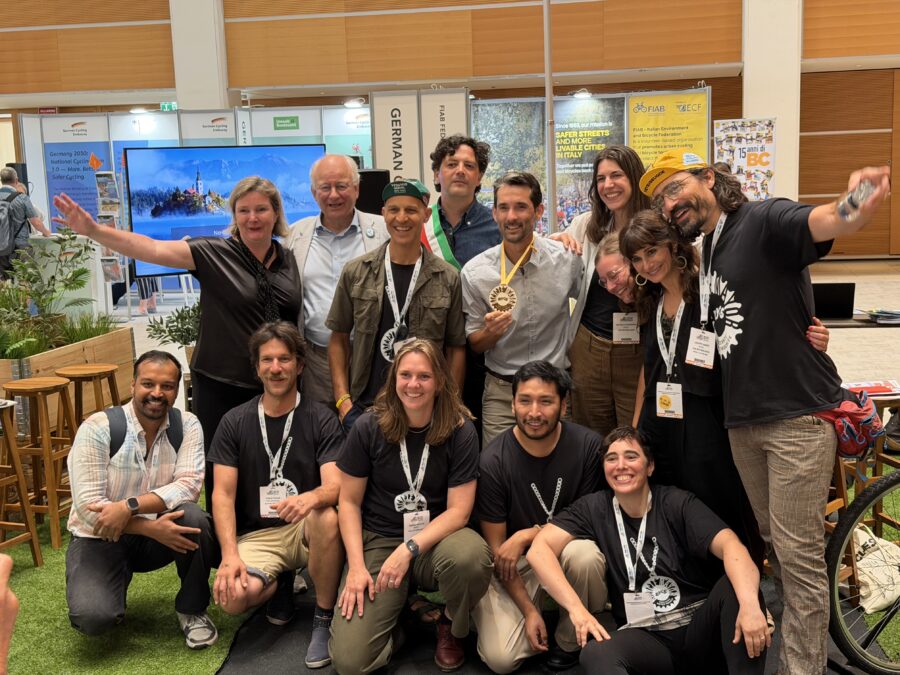 Local leadership on a global stage
This year, thirteen Bicycle Mayors travelled to Velo-city in Rimini, each carrying the lived experiences of their own cities. Throughout the conference, Bicycle Mayors contributed to conversations on citizen participation, healthier neighbourhoods, overcoming resistance to cycling, women’s leadership, youth mobility, safety and community advocacy.
Ashik, Bicycle Mayor of Pimpri-Chinchwad, explored how citizens become co-creators of urban transformation. Jeffrey, Bicycle Mayor of Lima, shared perspectives on healthier neighbourhoods. Maren, Bicycle Mayor of Addis Ababa, addressed one of cycling’s most persistent challenges: how do we overcome fear of change?
Later in the week, Antonella, Bicycle Mayor of Bari, Romee Nicolai, Bicycle Mayor of Amsterdam and BYCS’ Research & Development Coordinator, and Iden, Bicycle Mayor of Tirana, brought local perspectives to international discussions on health, inclusion, safety, gender equity and enabling young people to cycle.
Despite speaking from very different cities, these sessions revealed one common message: lasting change is rarely driven by infrastructure alone; It is driven by people.
Expertise built in the street
One of the most powerful aspects of Velo-city is not only what is discussed, but whose knowledge shapes the discussion.
Bicycle mayor bring a deeper expertise than just mobility planning theory. A big part of their knowledge comes from organising neighbourhood rides before there is political support, listening to parents who want their children to cycle but do not yet feel safe enough, and navigating the everyday realities of creating change within their own communities. It is expertise grounded not in theory alone, but in lived experience.
This is what BYCS calls the human infrastructure: the social trust, confidence, skills and access that motivate people to ride, and keep riding.
By bringing these voices onto the conference stage, Velo-city acknowledges that creating cycling communities requires more than technical solutions. It also requires an understanding of people: their motivations, their concerns and the often invisible steps that turn ambitious plans into lasting change. In doing so, the conference broadens the conversation about who gets to shape the future of urban mobility.
What travels home
The presentations in Rimini may have ended and the exhibition halls have emptied, but the conference’s impact does not end there.
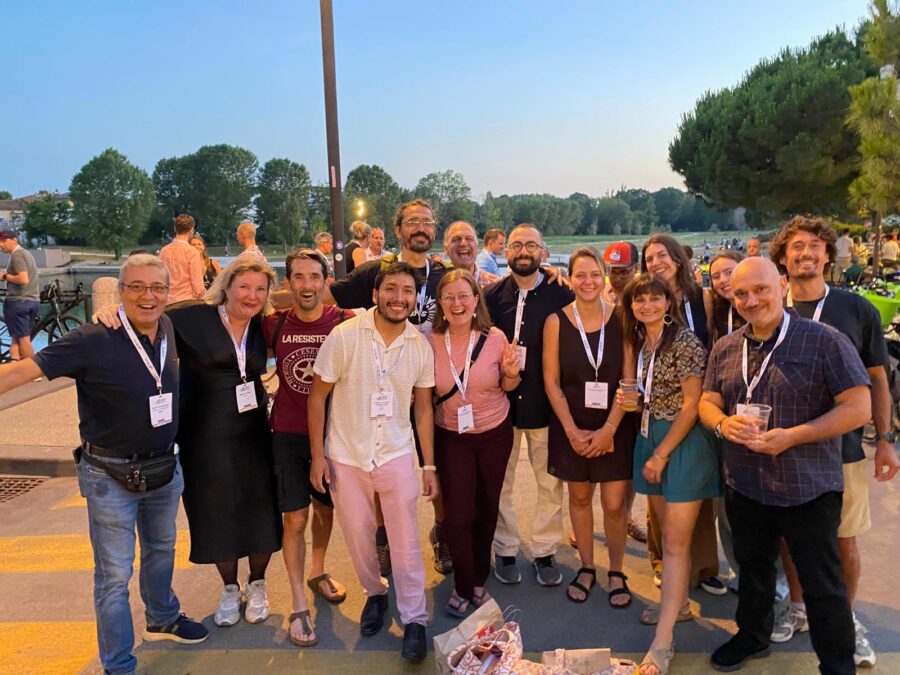
It travels home with each Bicycle Mayor: knowing they belong, a tested idea adapted to another context, or the phone number of someone who has already faced a similar obstacle. Months later, a conversation between sessions may become a collaboration between cities.
We often measure conferences by the number of delegates, speakers or sessions. Perhaps we should also measure them by something harder to quantify. The confidence they create, the friendships they strengthen and the belief they give people that change is possible.
Because Velo City brings cycling together. But people make a movement.
Where the movement travels next
Next year, that movement will travel even further.
For the first time, Velo-city will take place in Japan, bringing the global cycling community to Matsuyama in Ehime Prefecture. With its deeply rooted cycling culture, Ehime offers a new context for the relationships, ideas and experiences that move through Velo-city each year.
For the Bicycle Mayor Network, it also creates another opportunity to ask how far a locally rooted movement can travel. What new connections become possible when Bicycle Mayors from different parts of the world meet cycling advocates and communities across Japan and Asia? And what can those encounters carry back into more cities?
As we look towards Velo-city 2027, we hope to see even more local cycling leaders from across the region become part of that exchange. If you are working to make cycling more accessible, inclusive or visible in your city — or know someone who is — we invite you to discover the Bicycle Mayor Network and join a movement connecting local leadership across the globe.